
Gua Sha: My Full Body Relief for Face Jaw Stress Lymphatic Flow and More

New York can live in the body. It shows up as a clenched jaw on the subway, tight shoulders after hours over a laptop, swollen feet after walking all day, or that heavy, foggy feeling that comes with stress and poor sleep. Gua Sha is one of my favorite ways to help people slow that stress response down and feel more at home in their bodies again.
Most people know Gua Sha as a facial tool. They picture a smooth stone gliding along the cheekbones for glow, contour, and puffiness. That can be beautiful, but it is only one small part of the work. In my practice, I use Gua Sha for the face, jaw, scalp, neck, hands, feet, legs, and areas that feel stuck from repetitive strain, tension, or poor circulation.
This post is informational only and is not a replacement for medical care. If you have a medical condition, take blood thinners, bruise easily, are pregnant, or have active inflammation, check with a qualified healthcare professional before trying Gua Sha.
Gua Sha has roots that go far beyond beauty trends
Gua Sha comes from traditional Chinese medicine and has been practiced for generations across China and other parts of East and Southeast Asia. The words are often translated as “scraping sand,” which refers to the light redness or speckling that can appear when the skin is stroked with a smooth-edged tool.
Traditionally, Gua Sha was used on the body, not just the face. Practitioners used tools made from jade, horn, stone, ceramic, or other smooth materials. The goal was to move stagnation, support circulation, and help the body release tension or discomfort.
Facial Gua Sha became more popular in the West because it feels gentle, looks luxurious, and fits easily into a skincare routine. But the older body-based practice is still deeply relevant. For many people, the most meaningful results come from using Gua Sha on places that carry daily strain: the jaw, neck, shoulders, forearms, calves, soles of the feet, and hands.
That is why I do not treat Gua Sha as only a beauty service. I see it as a bodywork tool that can support both appearance and function.
How Gua Sha works in the body
Gua Sha uses a smooth tool and controlled strokes over lubricated skin. The pressure can be feather-light for the face or firmer for larger body areas, depending on the goal and the person’s comfort.
The technique may support the body in several ways.
It encourages local circulation.
Gliding pressure can bring warmth and blood flow to an area that feels cold, tight, or underused. Many people describe the treated area as feeling lighter or more open afterward.
It supports lymphatic movement.
The lymphatic system helps move fluid and waste through the body. Gentle Gua Sha, especially around the face, neck, underarms, legs, and feet, may help reduce the feeling of puffiness or heaviness. This is one reason people often love it after travel, long workdays, or salty meals.
It works with fascia and soft tissue.
Fascia is connective tissue that surrounds muscles and structures throughout the body. Stress, posture, and repetitive movement can make areas feel stuck or restricted. Gua Sha can help bring sensory input to these tissues and encourage a sense of release.
It can calm the nervous system.
Slow, rhythmic touch tells the body that it is safe to soften. This matters more than many people realize. A clenched jaw, tight scalp, shallow breathing, and lifted shoulders are often signs of a nervous system that has been on high alert for too long.
The best Gua Sha sessions are not aggressive. More pressure does not always mean better results. In my work, I pay attention to skin response, tissue texture, breathing, and comfort. The goal is relief, not forcing the body to submit.
Why Gua Sha is so useful in New York City
NYC asks a lot from the nervous system. Even on a good day, the body takes in constant stimulation: sirens, traffic, crowded trains, fast walking, bright lights, small apartments, long hours, and endless decisions.
That kind of pace can create patterns that feel normal until they become uncomfortable.
Common things I see include:
Jaw tension from clenching during work, commuting, or sleep
Forehead and scalp tightness from screen time and stress
Neck and shoulder restriction from phones and laptops
Hand and wrist strain from typing, texting, styling, cooking, or creative work
Heavy legs and feet from standing, walking, stairs, or long shifts
Facial puffiness after poor sleep, stress, travel, or inflammation
For someone searching for guasha new york, the need is often deeper than a sculpted cheekbone. The real desire is to feel less compressed. People want their face to look awake, yes, but they also want their jaw to stop gripping, their head to feel clearer, and their body to feel less overloaded.
That is where full-body Gua Sha can be so helpful.

Where I use Gua Sha beyond the face
A full-body approach lets me tailor the session to what the person is actually feeling. Some people come in for facial sculpting and realize their jaw, neck, and scalp need the most attention. Others come in for hand pain or leg heaviness and discover how connected everything feels.
Face and facial puffiness
Facial Gua Sha can support a brighter, more rested look by helping move fluid and increasing circulation. I use light, intentional strokes around the cheeks, jawline, forehead, brows, and neck.
This can be especially helpful when the face feels puffy, tired, or tense. The results are usually subtle and natural, not dramatic or frozen. The face looks more open because the tissue feels less congested.
Jaw tension and TMJ-related tightness
The jaw is one of the most common places people store stress. Clenching, grinding, chewing, talking all day, and looking down at a phone can all add to tightness.
I work around the masseter, chin, temples, and side of the face with careful pressure. I may also include the neck and scalp because the jaw rarely acts alone. People often feel a sense of softening through the face after this work.
Gua Sha does not “cure” TMJ disorders, and severe pain should be assessed by a medical or dental professional. But as supportive bodywork, it can be a useful part of a tension-care routine.
Scalp and head tension
Scalp Gua Sha is underrated. A tight scalp can make the whole head feel heavy. I use gentle scraping and combing motions along the scalp, hairline, temples, and base of the skull.
This can be deeply calming for people who carry stress in the forehead, temples, or behind the eyes. It pairs beautifully with breathwork and neck release.
Hands, wrists, and forearms
This is where many modern clients need help. Phones, laptops, tools, cooking, childcare, fitness, and creative work ask a lot from small muscles and tendons.
For hands and forearms, I use Gua Sha to warm the tissue, encourage circulation, and bring relief to tight areas. Around carpal tunnel concerns, I stay gentle and avoid making medical claims. If someone has numbness, weakness, or persistent nerve symptoms, they should get evaluated. But for general hand fatigue and forearm tightness, Gua Sha can feel incredibly relieving.
Legs, feet, and lymphatic flow
New Yorkers walk. They climb stairs. They stand on trains. They wear shoes that may not be kind to the body. By the end of the day, the legs and feet can feel heavy, swollen, or dull.
Gua Sha on the calves, shins, feet, and ankles can help the legs feel lighter. Gentle lymphatic-style strokes are especially useful for people who feel fluid retention from travel, long workdays, or too much sitting.
I often combine this with slow upward strokes, ankle movement, and breath. The treatment does not need to be intense to be effective.
What makes my Gua Sha sessions different
The experience is not one-size-fits-all. I do not use the same routine on every person. I look at how the body is holding stress that day.
Some sessions are more facial and lymphatic. Others are focused on jaw, scalp, hands, or legs. Some people need slow calming work, while others need more targeted release in a specific area.
The strongest guasha benefits often come from combining beauty and body relief. A glowing face is great. A softer jaw, clearer head, easier breath, and lighter body make the result feel more complete.
When people ask about gua sha manhattan, they are often looking for something that fits into a high-demand life. My approach is practical. It gives the body a pause, but it also teaches simple ways to maintain that relief between sessions.

How to bring Gua Sha into a daily routine
You do not need a long ritual to benefit from Gua Sha. A few consistent minutes can help, especially when the technique is gentle and intentional.
Start with clean skin and slip
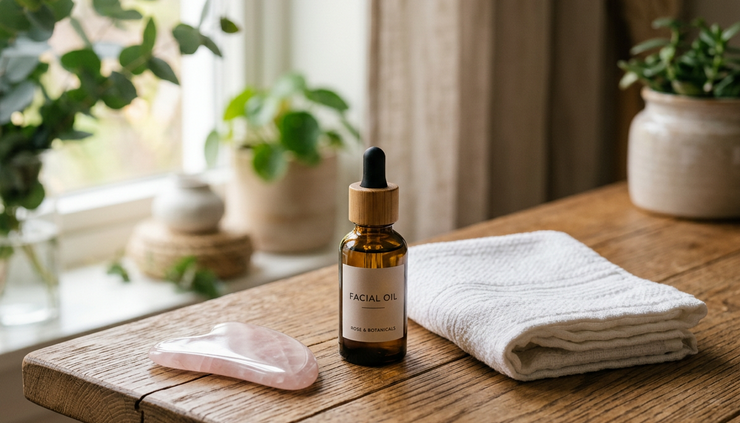
Never drag a dry tool over dry skin. Use facial oil, balm, lotion, or body oil so the tool glides easily.
For the face, choose something that suits your skin. For the body, a simple massage oil or lotion works well. The product should create slip without making the tool hard to control.
Use light pressure on the face
Facial skin does not need force. Think of the tool as guiding fluid, not scraping hard.
Try this simple sequence:
Begin at the neck with light downward strokes.
Move from the center of the chin toward the ear.
Glide from the side of the nose across the cheek.
Sweep from the brow toward the temple.
Finish with gentle strokes down the sides of the neck.
Keep the tool almost flat against the skin. If the area turns very red or feels irritated, stop.
Spend one minute on the jaw
For jaw tension, place the tool at the chin and glide toward the ear along the jawline. Move slowly. Pause where the muscle feels dense, but do not dig.
Then use small, gentle strokes over the masseter, the thicker muscle at the side of the jaw. Breathe through the nose while you work. If you notice you are clenching, let the teeth separate.
Use scalp strokes when your mind feels crowded
A scalp routine can be done without oil if the tool glides comfortably. Use a comb-like edge if you have one, or the rounded edge of a stone.
Move from the hairline back toward the crown. Then work around the temples and behind the ears. Keep it soothing, not scratchy.
This is one of my favorite nighttime habits for people who feel wired at the end of the day.
Treat hands and forearms with care
Apply lotion or oil to the forearm. Glide from the wrist toward the elbow with moderate, comfortable pressure. Then work the palm with small strokes from the center outward.
Avoid pressing directly into sharp pain, numbness, or tingling. Gua Sha should not make nerve symptoms worse.
Help tired legs feel lighter
For legs and feet, use upward strokes from the ankle toward the knee, then from the knee toward the thigh. Work slowly around the calves and shins. On the feet, glide from the heel toward the toes and along the arch.
If you have varicose veins, swelling from a medical condition, clotting concerns, or unexplained pain, get medical guidance before doing leg work.

How often to receive or practice Gua Sha
For home care, short and gentle is usually better than rare and intense. Many people do well with 3 to 5 minutes a day for the face, jaw, scalp, or hands. Body areas can be done a few times a week, depending on skin sensitivity and how the body responds.
Professional sessions can go deeper because I can see the skin, feel tissue changes, adjust pressure, and treat connected areas. For example, someone with jaw tension may also need work on the neck, temples, scalp, and shoulders. Someone with wrist strain may need the hand, forearm, upper arm, and chest addressed in a gentle sequence.
A good rule: the body should feel better after Gua Sha, not bruised, depleted, or inflamed. Mild redness can be normal with body Gua Sha, but pain is not the goal.
When Gua Sha is not the right choice
Gua Sha is generally gentle when done well, but there are times to pause. Avoid Gua Sha over:
Broken skin, cuts, burns, rashes, or active acne flare-ups
Fresh bruises or areas with unknown swelling
Recent injections or cosmetic procedures until cleared by your provider
Areas with infection or inflammation
Deep vein thrombosis concerns or unexplained calf pain
Skin that has lost sensation
If you bruise easily, take blood thinners, have a bleeding disorder, or are undergoing medical treatment, ask your healthcare provider first.
A more complete way to feel relief in the city
Gua Sha is often marketed as a beauty tool, but I see it as much more than that. It is a way to check in with the body, release the places that work too hard, and create a little more space in a city that can feel physically and mentally demanding.
Used well, it can support facial freshness, jaw ease, scalp relief, hand and forearm comfort, lighter legs, relaxed feet, and better lymphatic flow. It can be quick enough for daily care and deep enough for a restorative full-body session.
My goal when I provide Gua Sha is simple: help the body feel less held, less tight, and less overwhelmed. In a place like New York, that kind of relief is not a luxury. It is care that helps you move through the day with more comfort.


